A good salad does not need every vegetable in the fridge. It needs ingredients that work together, enough contrast to stay interesting, and a dressing that reaches the food without collecting in a puddle. Start by deciding whether the salad is a side dish, a sandwich filling, or the main part of a meal.
That decision changes the ingredients and portion you choose. Leafy vegetables alone have a different role from a bowl containing cooked grains and beans. A recipe can show a useful composition, but it does not establish that every variation meets an individual's nutritional needs.
Choose a base that suits the dish
Leafy greens, cooked grains, and beans are different kinds of bases. Tender leaves call for gentle tossing and careful timing. Grains and beans can support chopped vegetables and a more substantial dressing. You can combine them, but give each ingredient a clear role rather than adding it only because it is available.
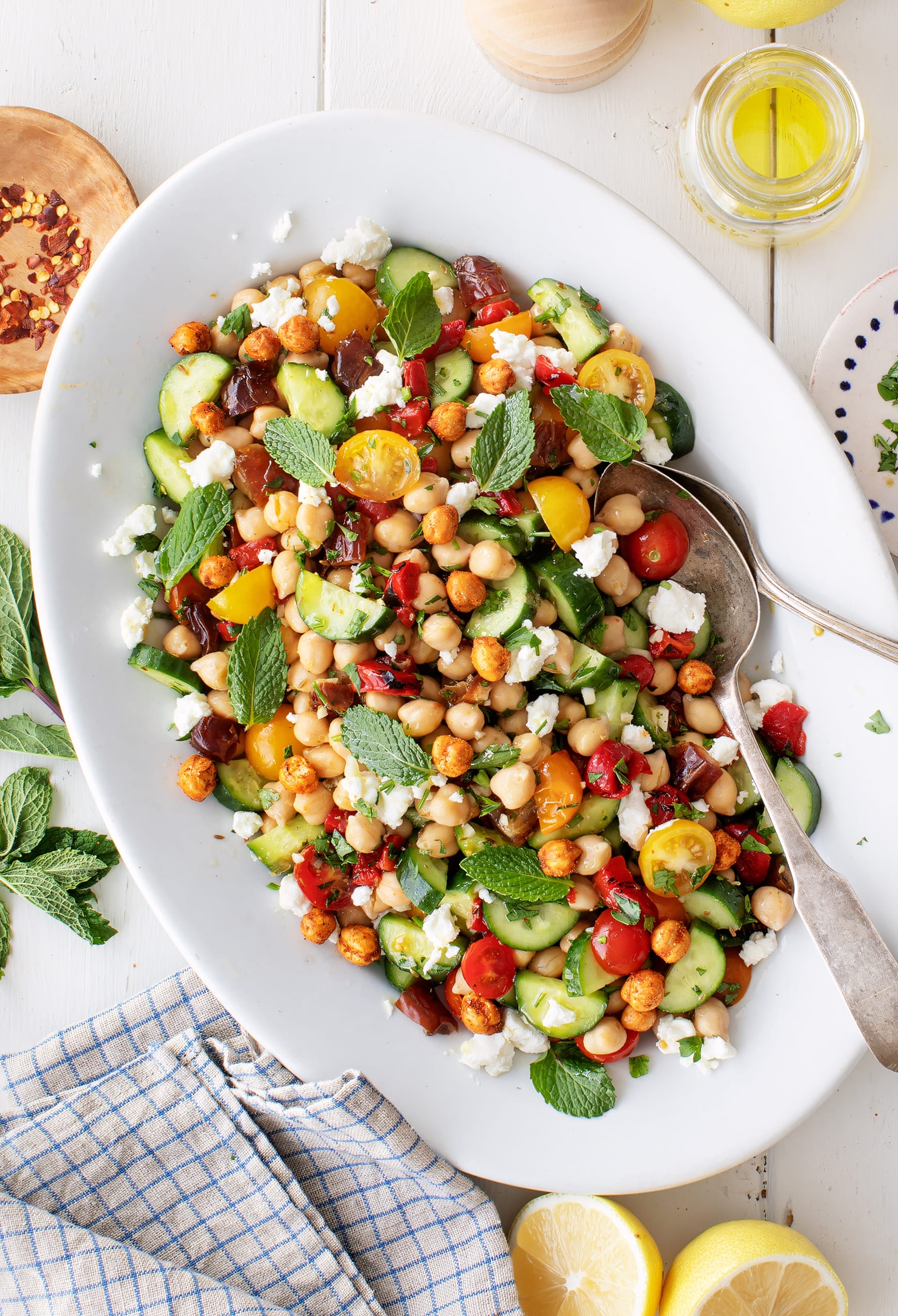
Broccoli Pesto Quinoa Salad combines cooked quinoa with greens, vegetables, and a pea pesto. Mediterranean Chickpea Salad starts with chickpeas and chopped vegetables. Read their quantities and methods before using either as a template.
Prepare ingredients for an easy forkful
Cut vegetables into pieces that can be eaten together. Very large leaves beside tiny chopped ingredients make a salad harder to mix and serve. Similar bite sizes help distribute flavor, while some variation in shape keeps the dish visually and texturally interesting.
Wash produce appropriately and remove excess surface water. Wet leaves and poorly drained beans can dilute dressing. If a recipe includes cooked ingredients, follow its instructions about cooling them before combining with delicate leaves or other components.
Balance soft and crunchy textures
Consider what the bowl already contains. Beans, avocado, or soft cheese contribute one kind of texture; peppers, radishes, or a small amount of seeds contribute another. A salad with several soft ingredients may benefit from a crisp vegetable more than another creamy topping.
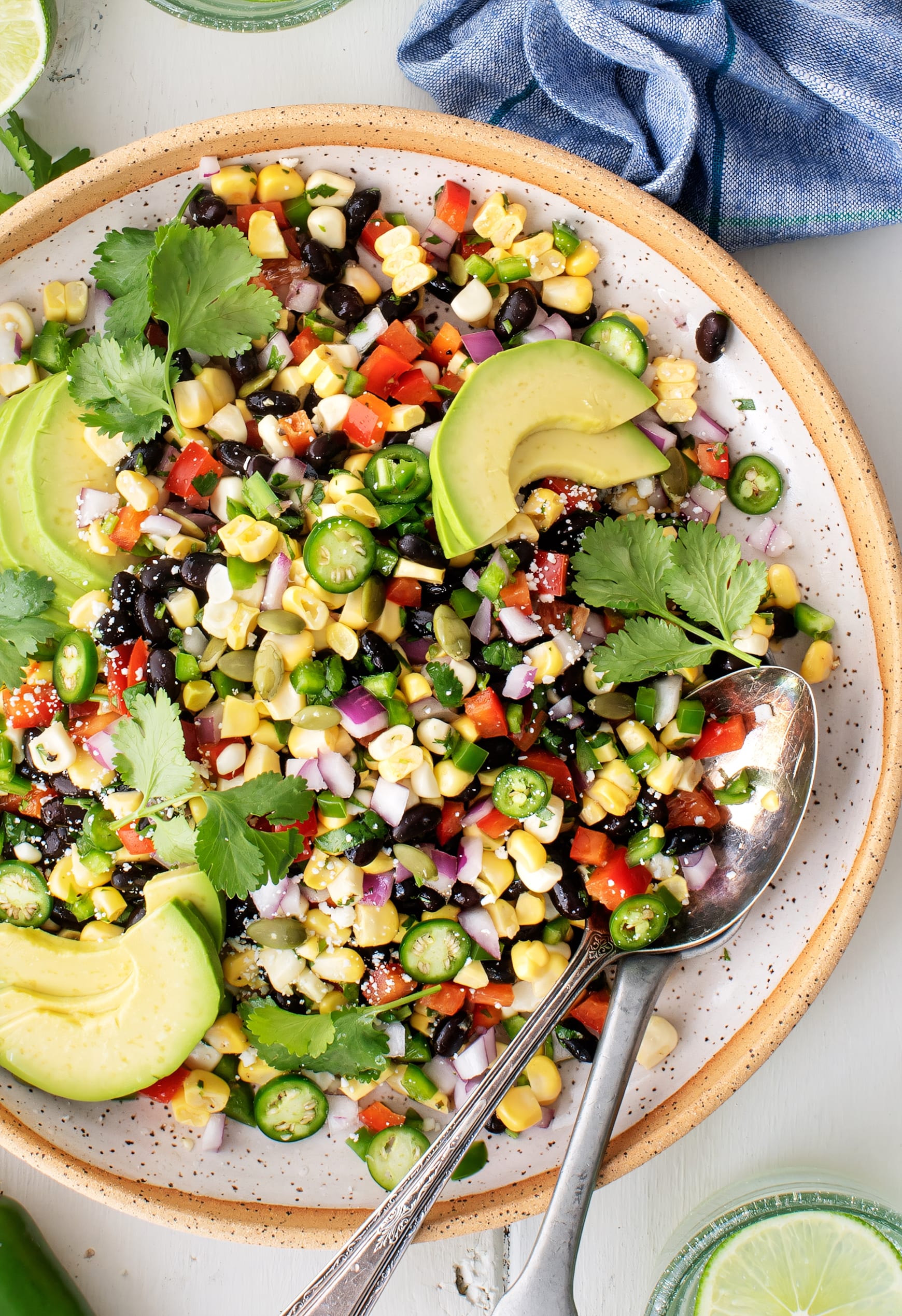
In Black Bean and Corn Salad, the beans, corn, pepper, and avocado provide contrasting textures. The method folds in cheese and avocado after the other ingredients are dressed, helping those softer ingredients keep their shape.
Mix the dressing before adding it
Whisk dressing ingredients together in a bowl or another suitable container. This lets you taste a small amount and distribute the ingredients before they meet the vegetables. Do not assume a dressing needs the same amount of salt for every salad: cheese, olives, capers, and other additions bring their own seasoning.
Add dressing gradually, toss, and check the result. Leaves should be coated rather than weighed down, and a bean salad should taste seasoned throughout. Use the recipe's quantity as your starting point, especially while learning how its dressing relates to the other ingredients.
Choose a small number of finishing flavors
Fresh herbs, citrus zest, pickled vegetables, and toasted toppings can each change the direction of a salad. They do not all need to be used at once. Choose a finish that reinforces the dressing and leaves the main ingredients recognizable.
A citrus dressing may work with herbs and a modest crunchy topping. A pesto-based bowl may already have enough herb flavor and richness. Taste before adding another layer, and account for food allergies whenever seeds, nuts, dairy, or prepared condiments are involved.
Dress and assemble at the right moment
Delicate greens can lose their texture after sitting in dressing. If preparing components ahead, keep them separate when the recipe advises it, refrigerate perishable items appropriately, and assemble near serving time. Do not assume an undressed salad or a dressing can be kept indefinitely.
Bean and grain salads may tolerate dressing differently from tender leaves, so follow the individual recipe's preparation and storage guidance. A single storage rule is not suitable for every combination of ingredients.
Check the finished bowl before serving
Taste a bite that includes several ingredients rather than a leaf by itself. Ask whether the seasoning is even, whether the components are easy to eat together, and whether the dressing has pooled at the bottom. Adjust gently so that softer pieces do not break apart.
For a complete recipe to practice with, choose one linked above. Keep its ingredient list intact on the first attempt, then make a focused variation next time. This builds a clearer understanding of texture and flavor than changing the base, dressing, and toppings all at once.