A tray of vegetables can look simple, yet small preparation choices make a noticeable difference. Pieces that are wet, crowded, or very uneven may soften without developing the browned edges you wanted. Start with a recipe suited to your vegetables, then pay attention to what is happening on the tray rather than relying on the timer alone.
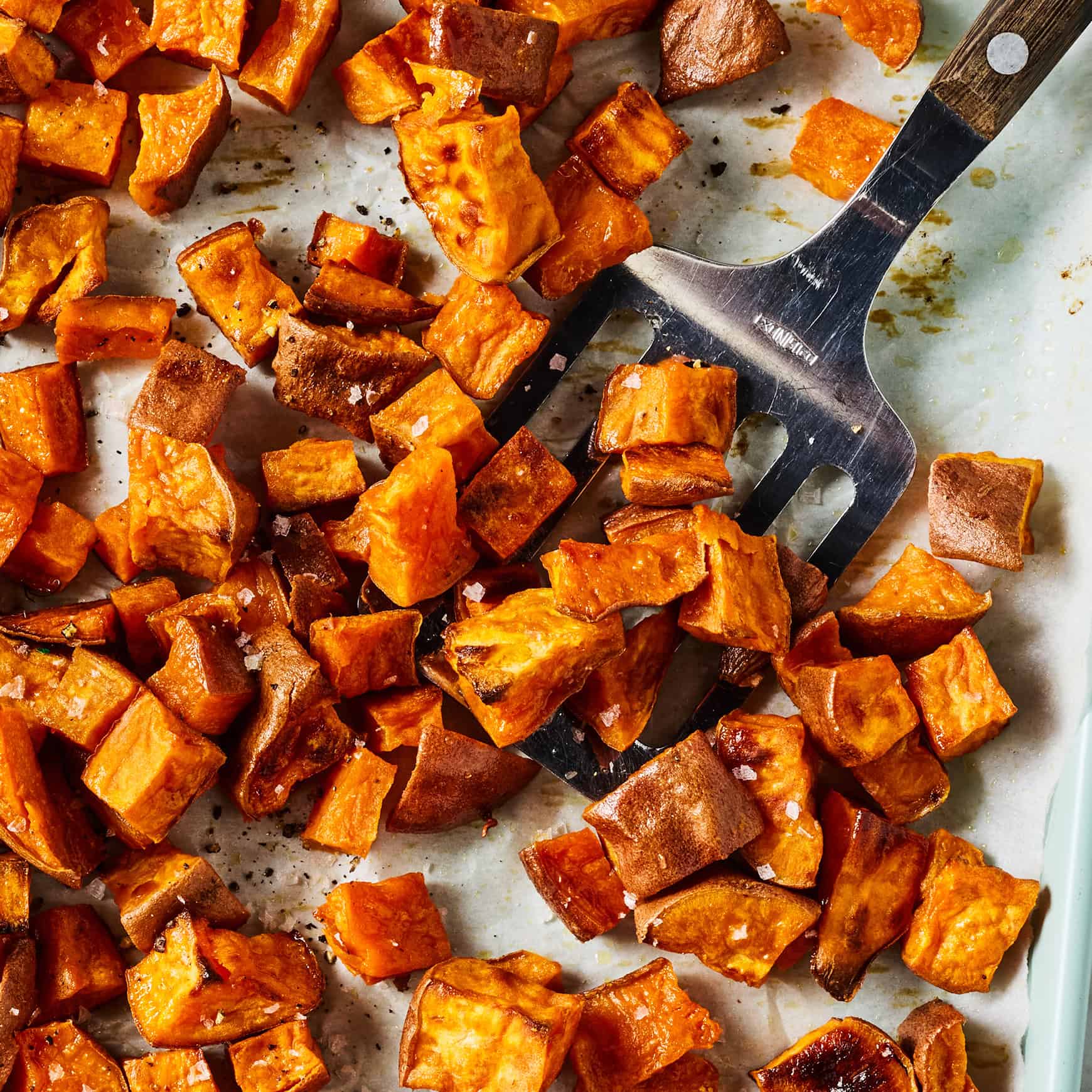
Roasted Sweet Potatoes provides a straightforward example: cube the vegetables, coat them with oil and seasoning, spread them over two trays, and roast until the edges are browned. The same decisions about shape, spacing, and doneness are useful when thinking about other vegetables.
Cut for an even cooking time
Aim for pieces with similar thickness. The exact shape can vary, but a thick chunk will usually need more time to soften than a thin slice of the same vegetable. If the smallest pieces are already dark while larger ones remain firm, more roasting time may burn one part of the tray before the other is ready.
Mixed vegetables need additional thought. Dense roots and tender vegetables do not necessarily cook at the same speed. Follow a tested mixed-vegetable method, roast them separately, or add the quicker-cooking ingredients later as directed by the recipe.
Remove unnecessary surface moisture
After washing vegetables, dry them before adding oil. Water on the surface has to evaporate during cooking, and a crowded tray holds onto that moisture. Drying does not mean leaving food uncovered for a long time; a clean towel or suitable salad spinner can handle the preparation step.
Frozen vegetables behave differently because they can release water as they heat. Use a method written for frozen ingredients instead of assuming that the timing and texture will match a recipe for fresh vegetables.
Coat the pieces without pooling oil
Toss vegetables so the oil and seasoning are distributed across the surfaces. A mixing bowl gives you room to turn the pieces and see whether some remain dry. Use the amount specified in the recipe, or its instructions for drizzling, rather than adding oil until a puddle forms underneath.
Keep delicate flavorings in mind. Small herb leaves and finely chopped garlic can darken before thick vegetables finish cooking. Add them at the point recommended by the recipe; ingredients that smell bitter or look burned will not improve with a longer roast.
Give the vegetables room on the tray
Spread the pieces in a single layer with some space between them. If the vegetables form a deep pile, the tray behaves more like a crowded cooking vessel than a roasting surface. Splitting a batch between two trays can be more effective than increasing the temperature to compensate for crowding.
- Choose a tray large enough for the amount you are cooking.
- Preheat the oven to the temperature stated in the recipe.
- Check that parchment or another liner is suitable for that temperature.
- Expect timing to change when you change the batch size or cut size.
Check texture as well as color
Use the recipe's time as a checking window. Look for the browning described in the method, then test a representative piece with a fork. Sweet potatoes should be tender inside; a browned surface alone does not prove that a large piece has finished cooking.
Ovens and trays can heat unevenly. Check both the middle and edges of the tray. Turn pieces or rotate trays when the recipe calls for it, and use appropriate oven protection whenever handling hot cookware. Avoid repeatedly opening the door early in cooking, which makes the heat less steady.
Finish with contrast
Once the vegetables are cooked, taste before adding more seasoning. A squeeze of citrus, chopped herbs, or a crunchy topping can create contrast without needing a heavy sauce. Choose a finish that works with the rest of the meal rather than adding every available garnish.
Roasted vegetables can accompany pasta or become part of a bowl, but a finished bowl is not automatically quick if several components need cooking. When using Burrito Bowl as inspiration, plan the rice, beans, and toppings alongside the roasting step. Keep the cooking technique and the meal schedule working together.